
Articles
News, Press and Industry Updates from Cohen IP Law Group

Can You Trademark a Generic .com Domain Name? What Booking.com Means for Your Brand
Can you trademark a generic domain name like Booking.com, Hotels.com, or Lawyers.com? The U.S. Supreme Court settled this question in a turning-point ruling with major repercussions for domain name holders and Internet business owners. These types of web addresses are extremely clear and searchable, and many of us would probably cite their obviousness, or dare…
READ MORE
2025 Guide to Reporting IP Infringement on Amazon: Trademarks, Patents, and Copyrights
The infringement of intellectual property (IP) is a steadfast problem for sellers and brand owners on Amazon—now in 2025. It doesn’t matter what form it takes, whether it’s a phony product listing, an unlicensed reseller, or someone just plain stealing your images or your patented technology. Amazon offers an array of tools sufficient for maintaining…
READ MORE
How to Protect Your Brand on Amazon: Trademark Strategies for Sellers
Amazon provides an enormous opportunity for selling—but it also puts your brand at some serious risk. If your trademark isn’t properly registered, your Amazon listings can be overtaken by sellers without your permission, some of whom are downright shady. This article will explain the reasons that make trademarks the essential element of Amazon brand protection,…
READ MORE
SnapPower vs. Lighting Defense Group: What Amazon Sellers Need to Know
Introduction: A Patent Dispute with Amazon Implications The e-commerce world is changing fast, and few tools match the potential of Amazon’s APEX (Amazon Patent Evaluation Express) program to transform patent enforcement. But a recent legal tangle, SnapPower, Inc., v. Lighting Defense Group, LLC raises serious questions about jurisdiction, which determines where a lawsuit can be…
READ MORE
Understanding Section 15 Declarations and Trademark Incontestability
In the United States, businesses are granted exclusive rights to their brand identifiers by trademark law. One of the most powerful tools available to trademark owners is the Section 15 Declaration, which can bestow “incontestable” status upon a trademark pursuant to 37 CFR § 2.167. This blog post considers what a Section 15 Declaration is,…
READ MORE
Statute of Limitations and Laches in Trademark Infringement: U.S., California, and the 9th Circuit
Grasping the time constraints for lodging a trademark infringement claim is vital for both trademark owners and accused infringers. In the U.S., there’s no federal statute of limitations that specifically applies to trademark infringement under the Lanham Act. Instead, courts use either the state law trademark infringement statute of limitations if there is one, or…
READ MORE
The Future of Wearable Neurotech: Patent Protection and Data Privacy Considerations
The wearable neurotechnology revolution is transforming the worlds of healthcare and consumer electronics at an extraordinary speed. Elapsed time from advanced concepts of wearable brain monitoring technologies, alongside tools for cognitive enhancement and systems for neural feedback, to actually available devices has been minimal to nonexistent. The market for devices that monitor brain activity and…
READ MORE
Trademark Disclaimers: Their Meaning and Importance
Trademark law is critical because it grants an owner the ability to protect their brand, allowing them to distinguish their goods and services from others in the marketplace. However, not all elements of a trademark are entitled to full protection of that brand. We often tell clients that not all the words of your trademark…
READ MORE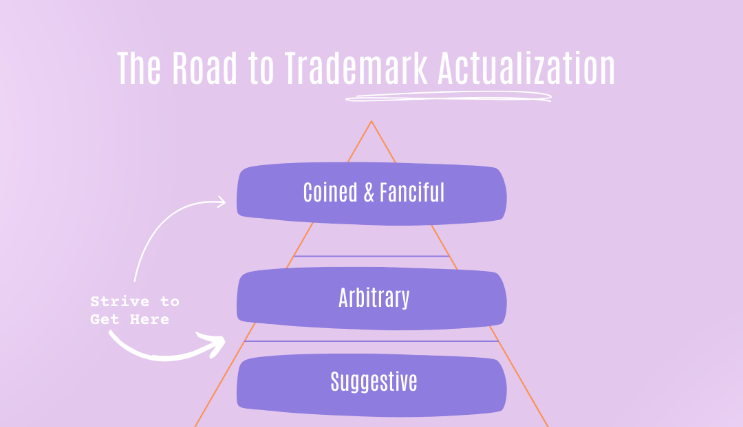
The Strength of Trademarks: The Distinctiveness Spectrum
Different types of trademarks have different levels of strength. The strength of a trademark determines its ability to be protected from trademark infringers and enforced against bad actors. U.S. trademark law classifies trademarks on a spectrum of distinctiveness that ranges from strong, highly protectable trademarks to weak or unregistrable trademarks. There are five categories: coined…
READ MOREPopular Posts
USPTO 2018-2022 STRATEGIC PLAN Draft Published
The United States Patent and Trademark Office (USPTO) publishes its draft 2018-2022 Strategic Plan which is an outline of its mission and goals that it wishes…
True Blood Wine Stirring Trademark Trouble
In 2008, HBO created the hit show True Blood, which has since become the most watched show on HBO since the Sopranos. Years before the…
U.S. House Passes Much-Needed Patent Legislation Bill
The USPTO’s chronic backlog problems and painfully slow registration process may soon be remedied. Last week, the House passed a bill that should speed up…