Using AI to Draft a Patent Application: What Inventors Should Know
Share:

Michael N. Cohen
Using AI to Draft a Patent Application: What Inventors Should Know
With the rapid development of artificial intelligence, inventors are increasingly using programs such as ChatGPT and other generative AI platforms to assist in preparing patent applications. Given the capabilities of these programs, it is not difficult to understand why.
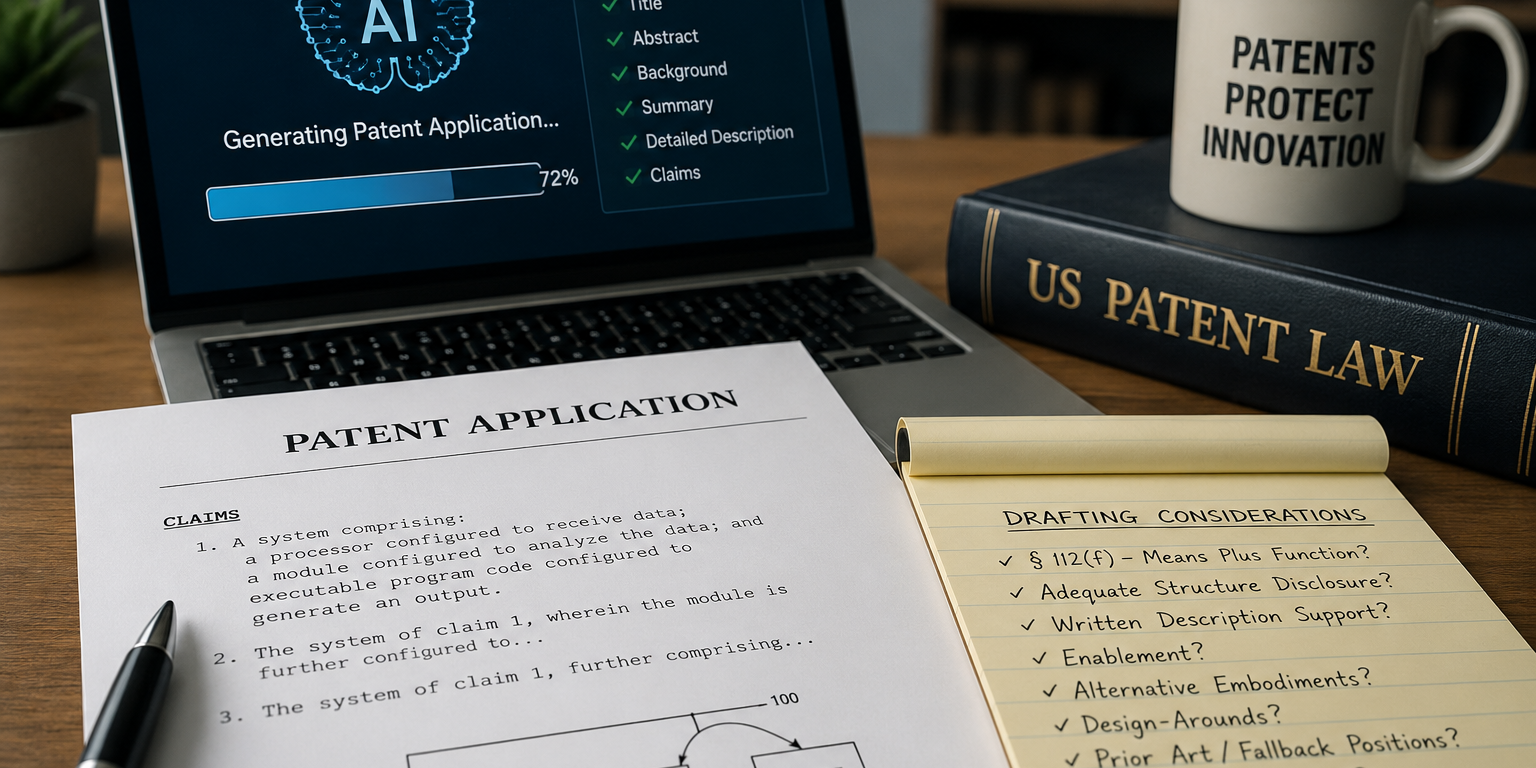
An inventor can provide a description of an invention and, within minutes, receive what appears to be a fairly complete patent application, including a background, detailed description, and even patent claims. For someone unfamiliar with patent prosecution or litigation, the resulting document may look substantially similar to an application prepared by a patent attorney.
The concern, however, is not whether AI can generate the language of a patent application. It clearly can. The more difficult question is whether AI can reliably identify and account for the legal and strategic issues that may ultimately determine the scope and enforceability of the resulting patent.
The Federal Circuit’s recent decision in TrackTime, LLC v. Amazon.com Services LLC provides a useful example. The case involved seemingly ordinary software claim terminology that ultimately became the subject of a dispute concerning 35 U.S.C. § 112(f) and indefiniteness. The decision illustrates an important point for inventors considering AI-assisted patent drafting: a patent application is not simply a technical description of an invention. It is a legal document that may be scrutinized years later by patent examiners, competitors, and federal courts.
TrackTime v. Amazon and Functional Patent Claims
In TrackTime, LLC v. Amazon.com Services LLC, decided by the Federal Circuit in July 2026, the patents at issue generally concerned systems for navigating multimedia using time-correlated transcripts. Certain claims recited limitations including “executable program code configured to facilitate annotation” and “executable program code configured to synchronously play” multimedia.
As part of an invalidity attack brought on by Amazon, district court reviewed one of the patents at issue, and determined that these limitations were subject to 35 U.S.C. § 112(f). Section 112(f) permits certain claim elements to be expressed in terms of the function they perform. When the provision applies, however, the claim is construed to cover the corresponding structure disclosed in the specification and equivalents of that structure.
This issue can become particularly important with software patents. If functional claim language is subject to § 112(f), the disclosure contained in the specification regarding how the claimed function is performed may become critical to both the scope and validity of the patent. As such, the district court held the asserted claims invalid as indefinite.
In appeals, the Federal Circuit vacated that portion of the district court’s decision. Importantly, however, the Federal Circuit did not hold that the phrase “executable program code” necessarily provides sufficient structure to avoid § 112(f). Instead, the court concluded that the district court’s analysis was insufficient, particularly in light of the Federal Circuit’s intervening decision in Dyfan, LLC v. Target Corp., and remanded the issue for further consideration.
What TrackTime Tells Us About AI Patent Drafting
The significance of TrackTime is not that patent applicants should stop using phrases such as “configured to” or “executable program code.” Depending upon the technology and disclosure, such terminology may be entirely appropriate. The larger point is that language that appears routine when a patent application is prepared can have significant consequences years later.
An AI system asked to prepare claims for a software invention might reasonably generate language such as:
- “a processor configured to”;
- “a module configured to”; or
- “executable program code configured to.”
These phrases appear throughout patent literature. The legal analysis, however, does not end with whether the terminology sounds appropriate. A patent drafter must consider whether the terminology may invoke § 112(f), whether it conveys sufficient structure in the context of the claimed invention, what supporting disclosure exists in the specification, and whether additional description concerning how the claimed function is performed should be included. These are not simply drafting or grammar questions. They require applying patent law to the particular technology being claimed, something that AI often fails to pickup or notice.
The Difference Between Describing an Invention and Protecting It
One of the principal risks of relying too heavily on AI is that the resulting application may accurately describe the inventor’s current product without adequately protecting the broader invention. Consider a simplified software example. An inventor develops a platform in which a mobile device sends information to a remote server. The server processes the information and returns a result to the mobile device. If that is how the inventor describes the technology to an AI system, the resulting patent application may repeatedly describe the invention using that architecture:
mobile device → remote server → processing → response
The description may be completely accurate. But what if the commercially important version of the technology three years later performs the processing locally on the mobile device? What if a competitor distributes the processing among several servers? What if the same inventive concept can operate without a conventional remote server at all? The patent drafting question is not simply whether the inventor’s existing system has been accurately described. It is whether the remote server is actually part of the invention or merely one way of implementing it. That distinction can ultimately determine whether a competitor infringes the patent or successfully designs around it.
A properly prepared patent application therefore generally attempts to identify the broader inventive concept while providing sufficient disclosure of alternative embodiments and implementations to support meaningful claim scope.
AI Does Not Always Know Which Questions Need to Be Asked
Generative AI works primarily from the information and instructions it receives. That creates a particular challenge in patent drafting because inventors frequently do not know which facts may eventually become legally important.
When reviewing an invention, a patent attorney may need to determine which components are actually necessary, which are merely preferred, whether steps can occur in a different order, whether another technology can perform the same function, and how a competitor might attempt to accomplish the same result without copying the inventor’s particular implementation.
These questions often lead to additional embodiments and alternative claim strategies. They can also become important when prior art is identified during prosecution. An examiner may locate a reference disclosing most of the features contained in an original claim. The applicant may then need to rely upon an additional feature or combination described elsewhere in the application. If that alternative was adequately disclosed when the application was originally filed, the applicant may have meaningful options for amending the claims. If it was omitted, adding it later may constitute new matter.
This is one reason a patent search can also be useful before filing. Understanding the existing technology can help identify where the potential point of novelty resides and where additional disclosure may be important.
A Professional-Looking AI Draft Can Still Be a Weak Patent Application
Generative AI can produce large amounts of sophisticated technical language very quickly. An inventor may generate a 30- or 40-page application containing numerous embodiments, detailed terminology, and professional-sounding claims. That can create a false sense of security. Patent applications are not evaluated based upon their length. A lengthy application may still fail to adequately disclose the feature later needed to distinguish the invention from the prior art. It may describe numerous generic variations while overlooking the commercially important alternatives.
Unnecessary language can also create problems. For example, repeatedly describing a particular feature as part of “the invention,” rather than one embodiment of the invention, may potentially affect how claim language is interpreted later. The objective is therefore not to generate the largest possible specification. It is to prepare a disclosure that provides appropriate support for the claims while avoiding unnecessary limitations.
Patent Applications Should Be Drafted With Future Enforcement in Mind
The TrackTime case also demonstrates why patent applications should be prepared with eventual enforcement in mind. The language scrutinized by the Federal Circuit was selected years before the litigation occurred. Yet those drafting choices ultimately became part of Amazon’s challenge to the asserted patent.
This is common in patent litigation. Parties may dispute the meaning of individual claim terms and argue that claims are indefinite, lack adequate written description or enablement, or should be interpreted narrowly based upon statements contained in the specification or prosecution history.
Experience with patent litigation provides an important perspective on patent prosecution for this reason. Understanding how patents are later attacked can influence how applications are drafted at the outset. The quality of a patent application, therefore, cannot be measured simply on the day it is filed. The more meaningful test may come years later, when an examiner identifies difficult prior art or a competitor challenges the patent. By then, correcting deficiencies in the original disclosure may no longer be possible.
AI Can Still Be a Useful Tool in Patent Practice
None of this means that artificial intelligence should be avoided in preparing patent applications. AI can be useful for organizing technical information, brainstorming alternative implementations, identifying terminology, summarizing technical materials, and increasing efficiency during the drafting process. The important distinction is between using AI as a tool and relying upon AI to make the underlying patent strategy decisions. AI involvement can also raise additional considerations. Under current U.S. law, only natural persons may be inventors, even where AI tools assist in the inventive process. Companies making extensive use of AI in research and development should therefore consider documenting the human contributions to conception.
Confidentiality is another consideration. Before entering unpublished invention information into a third-party AI platform, an inventor should understand how the provider stores, retains, and uses submitted information. An unfiled patent application may contain valuable confidential information or trade secrets.
Should You Use AI to Draft Your Own Patent Application?
There is nothing inherently wrong with using AI to assist in documenting or developing an invention. These tools will almost certainly become increasingly integrated into patent practice. The risk arises when AI’s ability to produce convincing patent language is mistaken for the ability to develop an appropriate patent strategy.
A patent application should be prepared not only for the invention as it exists today, but also with consideration of the claims that may be needed during prosecution, the variations competitors may adopt, and the arguments that could eventually be raised against the patent.
TrackTime provides a timely illustration. Seemingly ordinary language concerning “executable program code” eventually became part of a significant dispute over § 112(f) and indefiniteness before the Federal Circuit. AI may help prepare a patent application more efficiently. But the legal consequences of the language being used—and the disclosure that may be needed years later—still require careful judgment.
Inventors and businesses seeking patent protection can learn more about our firm’s patent application services or contact Cohen IP Law Group to discuss an appropriate patent filing strategy.
This article is provided for general informational purposes only and does not constitute legal advice.